By Mike, The SugarFreeMan
Founder of SugarDetox.com and the 30-Day Sugar Freedom Challenge
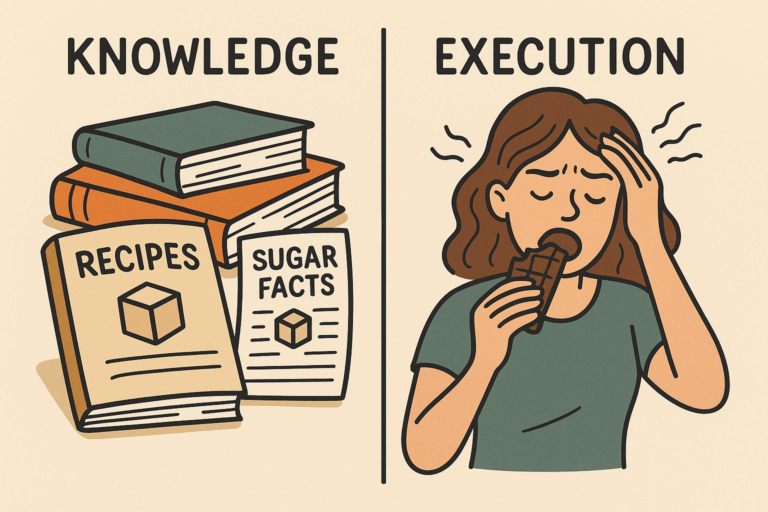
January is always the same. Weight loss tops the list of resolutions again – it has for years, probably will forever. People write it down, they commit to it, they mean it completely. And by February, most of them are right back where they started, wondering what went wrong.
The problem is almost never what people think it is.
This article was review by Dr. Camela McGrath, MD, FACOG. Find more about her here
What Actually Separates the People Who Make It
After 37 years of being sugar-free and helping over 60,000 people work through this, I’ve watched certain patterns repeat so consistently they’ve stopped surprising me.
The people who make it long-term are rarely the most motivated at the start. They’re not always the ones with the strongest “why.” They don’t necessarily have more willpower or more discipline than the people who don’t make it.
What they have is support.
Not inspiration. Not the right meal plan. Not a particularly good streak of willpower in January. Support – actual, structured, layered support – is the variable that changes outcomes more than anything else.
I was reminded of this recently during a conversation with a sugar educator who has spent over ten years teaching people how to quit. A mom, a wife, a teacher – in that order, as she put it. She’s worked with thousands of people and she keeps arriving at the same conclusion.
She calls it building scaffolding.

What Scaffolding Actually Means
When you’re renovating a building, scaffolding isn’t the building. It doesn’t replace the structure underneath. What it does is hold things in place while the real work happens – while the walls are being rebuilt, while things are vulnerable, while the process isn’t finished yet.
That’s exactly what support does when you’re quitting sugar.
The first few weeks off sugar are a period of genuine physical and neurological change. Research published in the journal Neuroscience and Biobehavioral Reviews has documented that sugar dependence involves the same dopamine pathways affected by drugs of abuse – which means quitting involves a real withdrawal process, not just a preference shift. The brain is recalibrating. That takes time, and during that time, things are harder than they’ll eventually be.
Scaffolding holds you up during that window. It’s not permanent. It’s not admitting weakness. It’s just an honest acknowledgment that the process has rough spots and you’ve decided in advance not to be caught off guard by them.
The scaffolding this educator described includes people, systems, groups, and – notably – your relationship with yourself. Specifically, making peace with the fact that rough spots will come, rather than treating every difficult moment as evidence that you’re failing.

Actionable takeaway: Before you start any sugar detox or reduction effort, name three people you’ll tell. Not to ask for anything specific – just to put it on record. Accountability starts with someone else knowing.
The Parent and Child Framework
One of the more useful ways she framed this: treat yourself the way you’d treat a child going through something hard.
A good parent doesn’t expect a child to sail through difficulty without ever needing comfort, redirection, or help. They expect the hard moments. They prepare for them. And when the hard moment arrives, they don’t panic – they respond with something that actually helps.
Most adults apply the opposite logic to themselves. They expect a clean, linear process. They plan for success but not for difficulty. So when the craving hits at four in the afternoon, or the evening gets long and hard, or something stressful happens at work and the old pull comes back – they’re caught off guard. They interpret the struggle as failure. And failure, especially repeated failure, eventually convinces people to stop trying.
Research on self-compassion and behavioral change, including work from Kristin Neff at the University of Texas, consistently shows that self-criticism after a setback makes relapse more likely, not less. People who treat their slip-ups with some version of “this is hard and I’m still in it” recover faster and stay on track longer than people who respond with shame.
This is not soft advice. It’s a practical observation about what actually works. Harsh self-judgment feels like accountability. It functions more like a trap door.
Actionable takeaway: Write down what you’ll say to yourself if you have a difficult day or a slip. Not inspiration – just a specific, calm response. Something like: “This was hard. Here’s what I’ll do tomorrow.” Having that sentence ready is more useful than willpower in the moment.
Why People Try to Do This Alone
Most people approach quitting sugar the way they’d approach any private health decision – quietly, without telling people, in case it doesn’t work. The logic is understandable. If no one knows, no one witnesses the failure.
But that logic also removes the scaffolding before you’ve even started. You end up with no one to call when it gets hard, no one noticing the progress, no one to check in with when the pink cloud fades and the craving comes back uninvited.
The diet industry, for all its messaging about personal transformation, has quietly built its business model around the solo attempt. The individual buys the book. The individual follows the plan. The individual succeeds or fails privately, then buys the next book. There’s no structural reason for that industry to push community and accountability, because community and accountability don’t require repeat purchases.
The CDC’s data on long-term weight management shows consistently that people who maintain behavioral change over years tend to have built it into their social environment – they eat differently around other people, they’ve told the people close to them, they’ve found others doing similar things. The change became part of how they live, not a private project they’re managing alone.
The people who stay off sugar long-term are almost never doing it by themselves.

Building Your Scaffolding Before You Need It
The mistake most people make is trying to build support in the middle of a difficult moment. That’s like trying to install a seatbelt during a crash. The time to build scaffolding is before the rough spots arrive, when things are calm and you can think clearly.
A few things that actually constitute scaffolding:
One person who knows what you’re doing and will check in. Not someone who will lecture you, just someone who knows. A text conversation where you can say “hard day” and have someone respond.
A specific plan for your highest-risk moment. For most people, that’s the late afternoon crash – roughly four o’clock – or the evening after a long day. Know what you’ll do in that window instead of reaching for sugar. Not a vague “I’ll drink water and go for a walk.” A specific decision made in advance.
Some contact with other people doing the same thing. Online communities, a structured program with other participants, anything that means you’re not the only person you know who is trying this. Isolation makes the difficulty feel abnormal. Other people doing it makes it feel manageable.
The Most Common Resolution Deserves More Than Willpower
Weight loss and healthy eating finish first on the resolution list every year, year after year, because people genuinely want this. The desire is real. The effort is real. What’s usually missing isn’t motivation – it’s the structure to survive the hard parts.
Support isn’t the same as someone cheering you on. It’s the systems and people in place before things get difficult, so when they do, you’re not improvising.
That’s scaffolding. And it’s the thing most programs forget to build.
A Program Built With the Hard Parts in Mind
The 30-Day Sugar Detox Challenge was built around this problem. It doesn’t just walk you through removing sugar – it walks you through the parts that usually derail people: the four o’clock wall, the evening loneliness, the moment the pink cloud fades and life gets stressful again.
People who finish it tell me the same thing: they stopped wanting sugar because they finally understood what was driving the craving. Understanding it takes away its leverage. You can’t negotiate with something you’ve already seen through.
If you’re serious about making this the year you actually stop the cycle instead of just starting another attempt, $19.97 gets you 30 days of daily guidance built for the real difficulty, not the ideal version of it: 30-Day Sugar Detox Challenge
About the Author
Mike Collins, known as “The SugarFreeMan,” has been sugar-free for over 35 years and is the founder of SugarDetox.com. He has helped over 60,000 people break free from sugar addiction through decades of personal experience and practical, no-nonsense guidance.
Medical Disclaimer
This article is for educational purposes only and is not intended to replace professional medical advice. Always consult with a healthcare provider before making significant dietary changes, especially if you have underlying health conditions.
FAQ
Q: Why do I keep failing at my resolution to quit sugar even when I really want to? A: Desire and motivation are real but they don’t survive stress on their own. Most failed attempts happen not because the person stopped wanting to quit, but because a difficult moment arrived and there was no plan or support in place to handle it. The missing piece is usually structure, not willpower.
Q: What does “building scaffolding” mean for quitting sugar? A: Scaffolding refers to the layers of support put in place before things get hard – telling someone you trust, identifying your highest-risk moments in advance, connecting with others doing the same thing, and having a calm, specific response ready for setbacks. It’s preparation, not inspiration.
Q: Does self-compassion actually help with quitting sugar or is that just feel-good advice? A: It’s practical. Research on behavioral change shows that harsh self-judgment after a slip makes relapse more likely, not less. People who respond to setbacks with “this is hard and I’m continuing” recover faster than people who respond with shame. This isn’t about being easy on yourself – it’s about not using shame as a strategy, because it doesn’t work.
Q: Why is it so much harder to quit sugar alone? A: Without anyone knowing, there’s no external check when motivation fades, no one to contact during a difficult moment, and no social reality to the change. Isolation also makes difficulty feel abnormal – like you’re the only one struggling. Contact with others doing the same thing normalizes the process and changes the odds significantly.
Q: What is the riskiest moment when quitting sugar? A: For most people, the late afternoon – around four o’clock – and the evenings after a long or stressful day. These are when the craving is strongest and when emotional eating is most likely to kick in. Identifying this window and having a specific plan for it in advance is more effective than trying to out-discipline the craving in the moment.
Q: How is quitting sugar different from a New Year’s resolution? A: Most resolutions are intentions without structure. Quitting sugar – particularly for someone with a dependency-level relationship with it – requires treating it more like recovery from any other addictive substance: with a plan, with support, with preparation for difficulty, and with an understanding of what was driving the behavior in the first place.