By Mike, The SugarFreeMan
Founder of SugarDetox.com and the 30-Day Sugar Freedom Challenge
Thirty Thanksgiving dinners without sugar. That’s not a number I throw out to impress anyone – it’s just long enough to know with certainty that what most people assume is impossible is actually pretty straightforward once you understand what’s driving the struggle.
The assumption is that the holidays require you to eat the way everyone else eats. That opting out means missing something. That suffering through aunt Carol’s pie with white knuckles and a tight smile is the best you can do.
None of that is true.
This article was review by Dr. Camela McGrath, MD, FACOG. Find more about her here
What Actually Happens to People Every Year
There’s a pattern I’ve watched repeat itself for years, and it’s so consistent it’s almost funny.
The moment Thanksgiving week arrives, email open rates drop. People go quiet. A mental switch flips somewhere that says: after the holidays. December 1st becomes the plan. Then December 1st arrives, there’s a spike of new people starting, and then Christmas is right around the corner so it becomes January 1st. And January 1st brings roughly ten times as many people making the same decision they postponed in November.
The holidays become a permission structure for delay.
That’s not a character flaw. It’s a very understandable response to a social environment that puts sugar in front of you every direction you turn and calls it celebration. But understanding it doesn’t mean you have to go along with it.
Most people who delay until after the holidays have already had their last hurrah. Multiple times. The New Year’s Eve binge before the January 1st start. The Thanksgiving weekend blowout before the December 1st plan. The Friday night splurge before the Monday start.
The last hurrah is a ritual that feels like preparation but is actually just more of the same.
When you’ve done it enough times, you start to recognize it for what it is: the addiction making a case for one more run before you take it away. Sugar affects dopamine and reward circuitry in ways that make “just one more time” feel like a reasonable idea. It isn’t. The research on this is clear -the NIH (National Institutes of Health) has documented that sugar activates the same neural pathways involved in drug dependence.
The last hurrah doesn’t make quitting easier. It just delays it.
What the People Who Start Before the Holidays Know
The people who do best long-term are consistently the ones who start before the big food holidays, not after.
At first glance that seems backwards. Wouldn’t it be easier to start when there’s less temptation around? The logic sounds reasonable until you think about it more carefully.
The holidays are not a break from real life. They are real life. Family gatherings, social pressure, food being used as a love language, someone who took two days to make a pie and is now looking at you expectantly – that’s the environment you need to be able to handle. Starting before the holidays means you build your footing in exactly the conditions that derail people every year.
And there’s something else. When you go through Thanksgiving, or Christmas, or a family birthday without eating sugar – and you’re fine – something shifts. The holiday stops being a threat. It becomes evidence that you can do this. That’s a different foundation than starting clean on January 2nd with the hardest situations still ahead of you.
What a Sugar-Free Holiday Actually Looks Like
This is the part people imagine wrong.
They picture deprivation. They picture watching everyone else eat while they sit there with a sad plate of vegetables, counting down the minutes until they can leave. They picture it being a constant, exhausting act of willpower.
That’s not what happens.
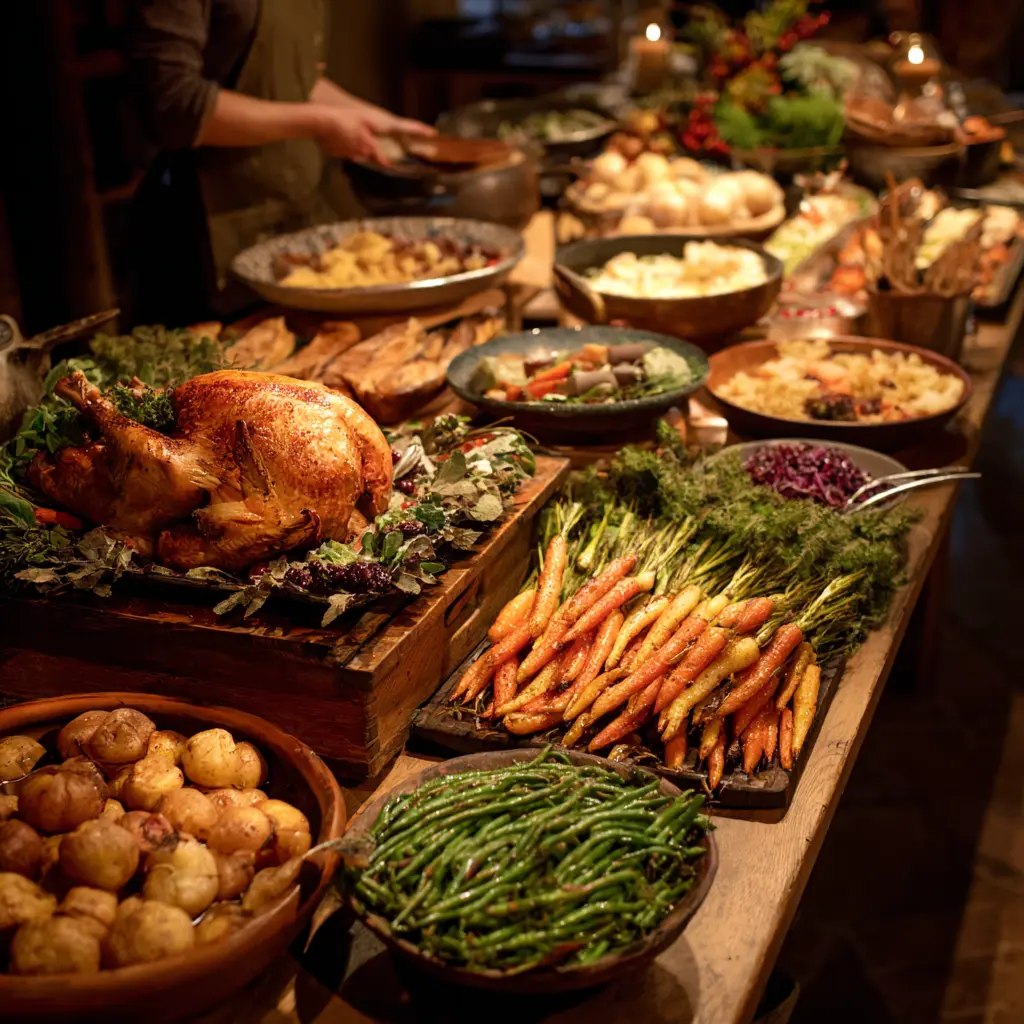
A Thanksgiving plate built around turkey, roasted vegetables, and the non-sugar parts of the meal is not a punishment. It’s a solid meal. The problem isn’t that the holiday food is bad – it’s that about a third of what shows up on a holiday table is dessert or dessert-adjacent, and that third is what you’re removing.
What you’re not removing: the conversation, the football game, the specific weird dynamic your family has had since 1987, or any of the things that actually make a holiday feel like a holiday.
Saying no to pie is a sentence. It takes about three seconds. The anticipation of saying it is dramatically worse than the moment itself.
After the first time you get through a holiday meal without sugar, you realize something important: the people around you are mostly too focused on their own plates to care about yours.
Handling the Social Pressure
This is the real obstacle for most people – not the food itself, but the social friction.
Someone made a dish. Someone is pushing it on you. Saying no feels like a rejection of their effort, their hospitality, their love. The food has become a proxy for something else, and declining it carries a weight that has nothing to do with whether you want the dessert.
A few things that actually work:
- “I’m good, thank you” said warmly and with eye contact ends about 80% of these conversations. People accept it.
- Eating before you arrive takes the edge off hunger, which makes navigating the table significantly easier.
- Deciding in advance – specifically, concretely, before you walk in the door – what you will and won’t eat removes the in-the-moment negotiation entirely. You’re not deciding at the table. You’ve already decided.
- If someone presses, “I’m watching what I eat right now” is a complete and socially acceptable answer that requires no further explanation.
You are not obligated to eat something because someone made it. That’s a social script, not a rule. And the more times you decline politely and the world doesn’t end, the more obvious that becomes.
The Honest Version of What Changes
After 30-plus sugar-free Thanksgivings, this is what the holiday genuinely looks like from my end.
I eat a real meal. I feel good after it instead of sluggish and stuffed with regret. Black Friday morning comes around and my head is clear. I didn’t spend the evening in that particular fog that follows a sugar load – the one that feels like your brain is running a few seconds behind your body.
None of that is a small thing. The fog is real. The post-holiday guilt spiral is real. So is the decision fatigue that follows a high-sugar meal when your blood glucose swings hard and your brain starts lobbying for something else to even it out.
When you remove sugar, the holidays stop being a thing that happens to you. You’re present for them differently.
If You’re Thinking About Starting Before the Holiday
The people who start before Thanksgiving – any year, not just this one – consistently do better over the following months than the people who wait until January. That pattern has repeated itself enough that I’m confident it’s not a coincidence.
If you want to walk through Thanksgiving, Christmas, and the rest of the holiday season without feeling like you’re white-knuckling every meal, the 30-Day Sugar Detox Challenge gives you a concrete plan for each day – including what to expect when cravings hit and how to handle the exact social situations that usually derail people. The people who finish it stop wanting sugar because they finally understand what was driving the craving. It’s $19.97 and you can start any day you decide to: [https://sugardetox.com]
About the Author
Mike Collins, known as “The SugarFreeMan,” has been sugar-free for over 35 years and is the founder of SugarDetox.com. He has helped over 60,000 people break free from sugar addiction through decades of personal experience and practical, no-nonsense guidance.
Medical Disclaimer
This article is for educational purposes only and is not intended to replace professional medical advice. Always consult with a healthcare provider before making significant dietary changes, especially if you have underlying health conditions.
FAQ
Q: Can you really enjoy Thanksgiving without eating sugar? Yes, and the experience is notably different in a good way. The traditional Thanksgiving meal – turkey, vegetables, savory dishes – doesn’t require sugar. Removing dessert and sweet sides leaves a substantial meal intact. Most people report feeling better after the meal and clearer the following morning compared to previous years.
Q: How do you say no to food at holiday gatherings without offending people? A warm, direct “I’m good, thank you” ends most of these situations. If pressed, saying “I’m watching what I eat right now” is socially acceptable and requires no further explanation. Deciding in advance exactly what you will and won’t eat – before you walk in – removes the in-the-moment pressure entirely.
Q: Is it better to start quitting sugar before or after the holidays? The evidence from people who’ve done it suggests starting before is consistently better. Going through a holiday without sugar builds confidence and removes it as a threat. Starting after the holidays means the most socially challenging situations are still ahead of you.
Q: Why do people always plan to quit sugar after the holidays? The holidays function as a permission structure for delay – a socially accepted reason to postpone a difficult change. The pattern repeats predictably: delay to December 1st, then January 1st, with each “last hurrah” making the next attempt feel further away rather than closer.
Q: What can you eat at Thanksgiving if you’re avoiding sugar? Turkey, roasted vegetables, green vegetables, plain potatoes, and most savory dishes are generally fine. The main items to skip are pies, sweet potato casseroles with sugar or marshmallows, cranberry sauce made with sugar, and any desserts. Eating a small meal before arriving makes navigating the table considerably easier.
Q: Does quitting sugar get easier after the first holiday? Yes, significantly. The first sugar-free holiday tends to be the hardest because the assumption is that it will be miserable. Once you get through it and find that it wasn’t – that you were present, you felt good afterward, the morning after was clear – the holiday stops feeling like a threat. That shift is difficult to replicate any other way.