By Mike, The SugarFreeMan
Founder of SugarDetox.com and the 30-Day Sugar Freedom Challenge
What the hell.
Can we ever get away from this stuff?
I’m standing in the hot bar section of a well-known health food store (you know the one, rhymes with “Whole something”), grabbing what I thought was a safe lunch option. After 35 years of navigating sugar-free eating, I know what I can and can’t eat in most restaurant settings.
I’ve stayed clear of institutional salt for many years, preferring sea salt or fancy pure rock salt at home instead.
For exactly this reason.
Because here’s something most people don’t know: there’s sugar in your salt. Yes, you read that right. Sugar. In. Salt.
And it’s been there for decades.
Quick Answer: Most table salt contains dextrose (a form of sugar) as an “anti-caking agent,” especially iodized salt. This hidden sugar can trigger cravings and sabotage your sugar detox efforts. Look for pure sea salt or rock salt with only one ingredient: salt.
This article was review by Dr. Camela McGrath, MD, FACOG. Find more about her here
Sugar in the Salt Supply: Not New, But Still Ridiculous
This came on my radar years back and I just avoided it. I never really looked deeply into the “sugar in our salt” issue because, honestly, I had already found my solution: just buy pure salt.
But recently I decided to dig deeper. And what I found is absolutely ridiculous.
The “reason” given for dextrose or other sugars in our salt? An anti-caking agent.
Let that sink in for a moment.
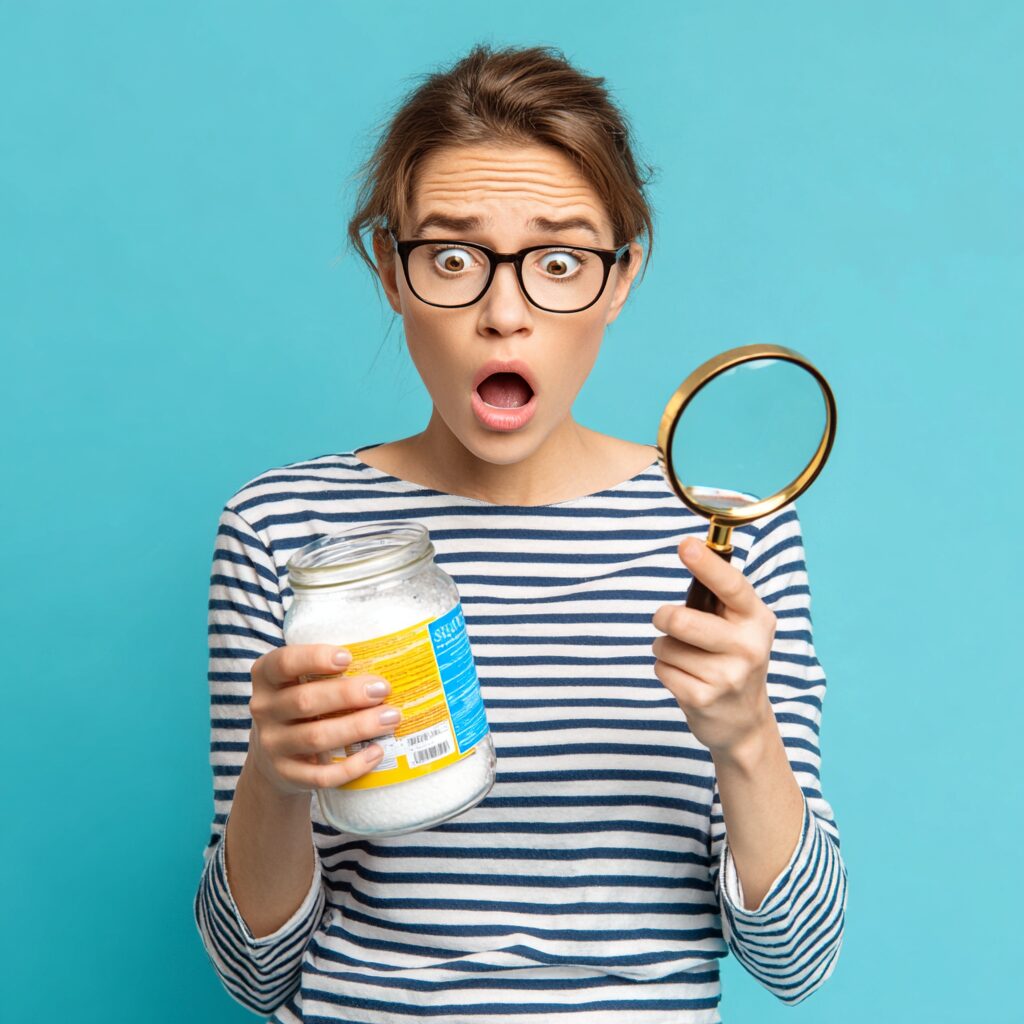
They’re putting sugar in salt to keep it from clumping. And this isn’t some conspiracy theory or fringe claim. Pick up a container of standard table salt and read the ingredients. Right there on the label, you’ll often see: Salt, Dextrose, Potassium Iodide.
Dextrose is sugar. Plain and simple.
Why Do They Really Need Sugar in Salt?
By now you would think that giant food producers wouldn’t be shy about using some other type of anti-caking agent in their salt. Why the heck do they need sugar anyway?
Sea salt says on the label: Sea Salt. That’s it. Rock salt? Same thing. Just salt.
The answer I kept finding: apparently when there is iodine in the salt, they need the caking agent.
But here’s what I think. I think it’s just another reason to put more sugar in everything. Because when you make a product slightly addictive, people use more of it. If customers feel compelled to use one more single-serve package of salt, the manufacturer just doubled the sale.
“But salt packets are free at restaurants,” you might say.
Sure, free to you. But the restaurant had to pay for them. And if customers use 50% more packets because the product triggers something in their brain that makes them want more, that’s more revenue for the salt manufacturer.
It’s brilliant, in a completely horrifying way.
The Bigger Picture: Sugar Is in 80% of Processed Foods
The overarching issue is that more than 80% of all processed foods in the grocery store contain added sugar, according to research published in the Journal of the Academy of Nutrition and Dietetics.
Why do you think that is?
It’s not because we need sugar for nutrition. Your body can make all the glucose it needs from other carbohydrates, proteins, and even fats. You could never eat another gram of added sugar in your life and be perfectly healthy. Probably healthier, actually.
No, sugar is in everything because it’s cheap, it acts as a preservative, and most importantly, it’s addictive.
When you eat sugar, your brain releases dopamine. You feel good. You associate that food with pleasure. You buy it again. That’s not a side effect. That’s the strategy.
The Children Never Stood a Chance
I do my best to stay out of the politics and policy of food production and distribution. I prefer to stick with helping the folks who really want to change.
But thinking about the kids just hurts my heart.
Since the 1970s, when high fructose corn syrup started inserting itself into our food system, children have been swimming in an ocean of sugar from their first solid foods. They never had a chance to develop normal taste preferences or healthy relationships with food.
When I was in school, there was maybe one obese kid in every grade. One.
Now the numbers are staggering. According to the Centers for Disease Control and Prevention:
- 18% of children ages 2-11 are obese (not just overweight, obese)
- 21% of adolescents ages 12-19 are obese
- These numbers have tripled since the 1970s
What changed? The food supply changed. Sugar went from being a special occasion treat to being in literally everything, including the salt.The Hard Truth: We’re conducting a massive, uncontrolled experiment on our children’s health by allowing sugar to be added to virtually every processed food they eat, from breakfast cereal to “healthy” yogurt to the salt on their French fries.
Savory Was Supposed to Be the Opposite of Sweet
Here’s what really gets me about this.
Savory, as in salty, is supposed to be the opposite of sweet. It would be nice if we could at least count on our savory food as sugar-free.
When you’re trying to quit sugar, you naturally gravitate toward savory foods. Eggs. Meat. Vegetables with salt and butter. Nuts. Cheese. These are the foods that don’t trigger sugar cravings, that keep your blood sugar stable, that help you feel satisfied without the roller coaster.
But if the salt you’re sprinkling on those foods contains sugar? You’re unknowingly triggering the exact cravings you’re trying to eliminate.
It’s insidious.
Could Salt Be the Reason for Your Mysterious Cravings?
I’ve worked with people over the years who swear they’re being strict with their sugar detox. They’ve eliminated the obvious stuff. They read labels. They cook at home. They’re doing everything right.
But they still have cravings. They still struggle. They still feel that pull toward sugar.
Sometimes, it’s the salt.
They’re eating eggs for breakfast, salting them liberally with iodized table salt that contains dextrose. They’re having a salad for lunch, adding a dash of that same salt. They’re preparing chicken for dinner, seasoning it with salt that has sugar in it.
Multiple times a day, they’re getting tiny hits of sugar without even realizing it. Just enough to keep the addiction alive. Just enough to keep the cravings going.
And they have no idea why they can’t seem to break free.
The Anti-Caking Agent Excuse: Let’s Break It Down
Okay, so the official explanation is that dextrose prevents caking in iodized salt. Let’s examine that claim.
What Is Caking and Why Does It Happen?
Salt naturally absorbs moisture from the air. When it does, the salt crystals can stick together, forming clumps or “cakes.” This makes it harder to pour from a shaker and can affect how evenly it disperses on food.
The addition of iodine to salt (which started in the 1920s as a public health measure to prevent iodine deficiency) made this caking problem worse. Iodine compounds can be unstable and can promote moisture absorption.
So they added dextrose as a stabilizer and anti-caking agent. Dextrose supposedly prevents the iodine from breaking down and helps keep the salt free-flowing.
But Wait, There Are Other Anti-Caking Agents
Here’s the thing: there are multiple anti-caking agents used in various food products. Some examples include:
- Silicon dioxide (found in many spices and dried foods)
- Calcium silicate
- Sodium ferrocyanide (used in some European salts)
- Magnesium carbonate
So why specifically use sugar? Why not one of these alternatives?
The answer I keep coming back to: because sugar is cheap, and because sugar makes people want more.
Pure Salt Doesn’t Need Anti-Caking Agents
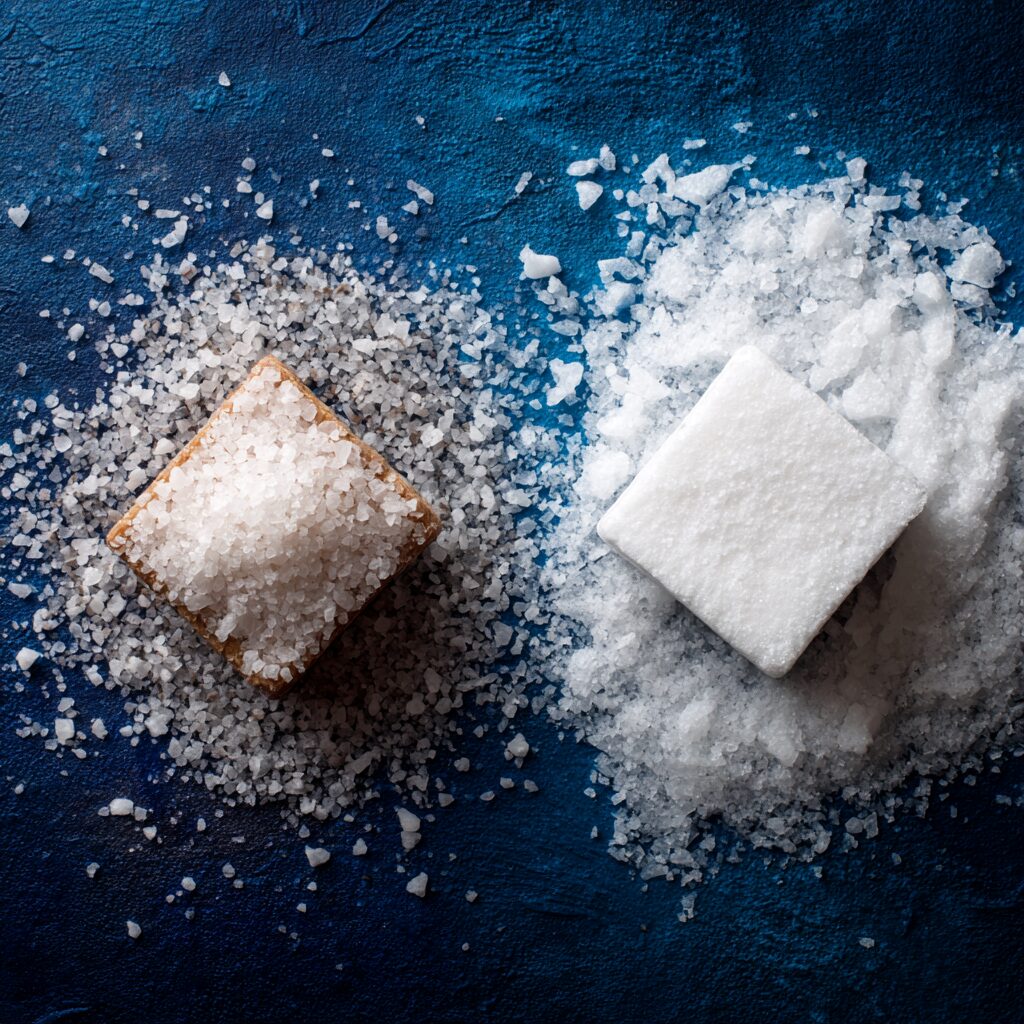
Sea salt and rock salt don’t have these additives. The labels say one thing: Salt.
Do they sometimes clump a little? Sure, especially in humid environments. But you know what? You give the container a little shake and it’s fine. It’s really not a problem.
The “anti-caking agent” excuse feels like just that: an excuse to justify putting sugar in a product where it absolutely doesn’t belong.
The Eternal Vigilance Required for Sugar-Free Living
The eternal vigilance in getting the right foods can be a drag sometimes.
I’m not going to lie to you and pretend it’s always easy to stay sugar-free in our current food environment. It requires constant awareness, label reading, asking questions at restaurants, and sometimes accepting that you just can’t eat certain things.
But here’s what I’ve learned over 35 years: it gets easier. The vigilance becomes automatic. You develop systems and habits. You find your safe brands and stores. You learn to navigate the minefield.
And the payoff is worth it. Every. Single. Time.
Eating Out: The Unique Challenges
Eating out has its own unique set of challenges when you’re sugar-free.
Sauces often contain sugar. Salad dressings are loaded with it. That “grilled chicken” might have been marinated in a sugary mixture. The vegetables might be glazed. The bread has sugar. The soup likely has sugar.
And now we know that even the salt on the table might have sugar in it.
So what do you do? You ask questions. You make special requests. You keep it simple. Grilled meat, plain vegetables, olive oil and vinegar for dressing. You bring your own salt if you’re really committed (yes, I’ve done this).
Is it sometimes awkward? Sure. But you know what’s more awkward? Being sick, overweight, and addicted to a substance that’s destroying your health.
Health Food Stores Are No Guarantee
This is important to understand: just because you’re shopping at a health food store doesn’t mean everything there is healthy or sugar-free.
Those hot bars can be dangerous. Items that look healthy often contain hidden sugars in marinades, sauces, and seasonings. That “healthy” prepared salad might have a dressing with more sugar than a candy bar.
The organic cookies in the bulk section? Still loaded with sugar. The “natural” granola? Sugar bomb. The “healthy” protein bars? Check the label – many have as much sugar as a Snickers bar.
You still need to read labels. You still need to ask questions. You still need to be vigilant.
The only difference is you’re paying more for the privilege.
Ready to Navigate the Sugar Minefield With Confidence?
Our 30-Day Sugar Detox Challenge teaches you exactly how to identify hidden sugars in unexpected places, what brands and products are truly safe, and how to stay sugar-free even when eating out or traveling.
You’ll learn the label-reading tricks, the restaurant strategies, and the practical skills you need to maintain your freedom from sugar in the real world.
Other Hidden Sugar Traps Lurking in “Savory” Foods
Sadly, salt isn’t the only place sugar hides in foods you’d expect to be sugar-free. Let me expose some other common traps.
Commercial Spice Blends
Ever wonder why that store-bought “everything bagel” seasoning or “Italian herb blend” tastes so good? Check the ingredients. Many commercial spice blends contain sugar or maltodextrin (which behaves like sugar in your body).
Solution: Buy individual spices and make your own blends, or carefully read labels on pre-made blends.
Cured and Processed Meats
Bacon, ham, sausage, deli meats – almost all of them contain added sugars in the curing or processing. Even products labeled “uncured” often use celery powder, which is high in natural sugars.
Solution: Look for brands specifically marketed as sugar-free, or buy fresh meat and season it yourself.
Restaurant and Fast Food “Grilled” Items
That grilled chicken at your favorite chain restaurant? It was likely marinated in a solution containing sugar. Those fajita vegetables? Often seasoned with a blend that includes sugar.
Solution: Ask for plain grilled protein with no marinade, or stick to very simple preparations.
Salted Nuts
This one really gets me. You grab a can of salted nuts thinking it’s a safe, protein-rich snack. But look at the ingredients: nuts, salt, and often corn syrup or sugar.
And here’s the question that keeps me up at night: if the store buys salt from a vendor that contains sugar, and they use that salt on peanuts or other products, do they even have to declare it? The label could say “salt,” but it could have sugar in it too.
Solution: Buy raw nuts and salt them yourself at home with pure salt.
Beef Jerky and Meat Snacks
Nearly all commercial jerky is loaded with sugar, even the “original” flavors. It’s in the marinade, the cure, and the seasonings.
Solution: Make your own jerky, or find the few brands that are truly sugar-free (they exist, but you’ll pay more for them).
Sauces and Condiments
Ketchup, barbecue sauce, teriyaki sauce, honey mustard – these are obvious. But even regular yellow mustard often contains sugar. Mayonnaise sometimes does too. Soy sauce can. Hot sauce occasionally does.
Solution: Read every label, every time. Brands change formulas. What was sugar-free last year might not be this year.
How to Protect Yourself: The Sugar-Free Salt Strategy
Alright, enough exposing the problem. Let’s talk solutions.
What to Buy Instead of Table Salt
Your best options for truly sugar-free salt:
- Sea salt – Unrefined, minimally processed, just pure salt from evaporated seawater. Ingredient list: Salt. That’s it.
- Himalayan pink salt – Rock salt from ancient sea beds, contains trace minerals. Ingredient list: Salt.
- Celtic sea salt – Grayish salt harvested from coastal areas of France, mineral-rich. Ingredient list: Salt.
- Kosher salt – Usually just pure salt, but check the label. Some brands add anti-caking agents.
What to avoid:
- Standard table salt with “dextrose” in the ingredients
- “Lite salt” or “reduced sodium salt” (often contains added ingredients)
- Seasoned salts or flavored salts (unless you’ve verified no sugar in the seasonings)
The Label Reading Rule: One Ingredient Maximum
This is my rule for salt: if the ingredient list has more than one item, I don’t buy it.
Pure salt is pure salt. It doesn’t need anything else. If it has multiple ingredients, there’s something in there I probably don’t want, and it’s most likely sugar in some form.
What About Iodine?
Some people worry about missing out on iodine if they skip iodized table salt. Here’s the reality:
If you eat seafood occasionally, use sea salt (which contains trace iodine), or eat dairy products, you’re probably getting enough iodine. Iodine deficiency is rare in developed countries unless you’re following a very restricted diet.
If you’re concerned, you can:
- Eat seaweed or kelp occasionally (incredibly high in iodine)
- Eat wild-caught fish
- Eat organic eggs (chickens fed kelp meal produce eggs higher in iodine)
- Take an iodine supplement if recommended by your doctor
But you don’t need to consume sugar to get iodine. That’s a false choice.
Restaurant Strategy: Bring Your Own or Skip It
I know people who carry their own salt in a small container when eating out. Is it a little extreme? Maybe. Does it work? Absolutely.
Alternatively, you can just eat food with less salt when you’re out and add your own when you get home. One meal without much salt won’t hurt you.
The key is being aware and making conscious choices rather than unknowingly consuming sugar every time you add “salt” to your food.
The Bigger Mission: Why I Don’t Give Up
I don’t want to sound like a whiner, and discovering sugar in salt in no way deters me from our mission.
If anything, it reinforces how important this work is.
The food industry has systematically inserted sugar into virtually every product in the grocery store, even ones where it makes absolutely no sense. Salt is supposed to be salty, not sweet. But they put sugar in it anyway.
Why? Because sugar is profitable. Because sugar is addictive. Because sugar makes people buy more.
Knowledge Is Power
I just wanted to get the info out there for you so that freaking salt wasn’t the reason you had cravings for sugar.
Because that would be the ultimate irony, wouldn’t it? You’re doing everything right, eliminating obvious sugars, eating whole foods, and you still can’t shake the cravings because the salt you’re using has sugar in it.
Now you know. And knowing gives you the power to make different choices.
For You Salty Sugar Quitters
I know some of you lean heavily on salty foods when you quit sugar. That’s completely normal and actually a smart strategy.
Salty, fatty foods like eggs with butter, bacon, salted nuts, and cheese can help satisfy you and keep cravings at bay during the early days of sugar detox.
Just make sure the salt you’re using is actually just salt.
Check your:
- Table salt
- Sea salt (should be fine, but verify)
- Seasoning blends
- Salted snacks (read the full ingredient list)
- Restaurant salt packets (if you can see the ingredients)
One simple swap – from table salt to pure sea salt – can make a significant difference in your sugar detox success.
The Truth About “Natural” and “Healthy” Labels
Here’s something else this salt situation teaches us: you can’t trust labels like “natural” or assume that something sold at a health food store is automatically good for you.
Dextrose is technically “natural.” It comes from corn. But it’s still sugar, and it still triggers the same addictive response in your brain as any other sugar.
The word “natural” on a food label is essentially meaningless. It’s not regulated by the FDA in any meaningful way. Companies can slap “natural” on almost anything.
What You Can Trust
The only thing you can truly trust is the ingredient list. Not the marketing claims on the front of the package. Not the health halo of the store you’re shopping in. Not the organic certification (organic sugar is still sugar).
Just the ingredients.
If you see any form of sugar in the ingredients – and remember, it hides under more than 60 different names – you know what you’re dealing with.
And you can make an informed choice about whether to buy it or not.
“The food industry has betrayed our trust. They’ve put sugar in products where it has no business being. Our only defense is knowledge and vigilance.”
Moving Forward: What You Can Do Today
Alright, so you’re probably feeling a little overwhelmed right now. Sugar in the salt? Sugar in 80% of processed foods? How do you even navigate this?
Here’s your action plan:
Step 1: Check Your Current Salt
Go to your kitchen right now. Pick up your salt container. Read the ingredients.
If it says anything other than “salt,” you know what to do. Don’t panic, don’t beat yourself up. Just know that you’re going to replace it with pure salt.
Step 2: Buy Pure Salt
Next time you’re at the store, buy sea salt, Himalayan pink salt, or another pure salt option. It might cost a dollar or two more than table salt. That’s okay. Your health is worth it.
Step 3: Start Reading All Labels More Carefully
If they’re putting sugar in salt, they’re putting sugar in everything. Don’t assume anything is sugar-free just because it’s not a dessert.
Read every ingredient list on every product you buy, every time. Yes, it takes longer. Yes, it’s annoying. But it’s the only way to truly know what you’re putting in your body.
Step 4: Simplify Your Food Choices
The more processed a food is, the more likely it contains hidden sugars. The simplest way to avoid hidden sugars is to eat foods that don’t need ingredient labels.
Eggs don’t have labels. Fresh meat doesn’t have labels. Vegetables don’t have labels. Plain nuts don’t have labels.
When you buy foods that are just… food… you eliminate most of the hidden sugar problem.
Step 5: Join a Community That Understands
Trying to navigate all of this alone is exhausting. Having a community of people who understand the challenge, who’ve already figured out which brands are safe, who can answer your questions and support you through the frustration makes all the difference.
You don’t have to figure everything out on your own.
Stop Playing Detective With Every Food Label
Our 30-Day Sugar Detox Challenge gives you comprehensive lists of safe products, specific brand recommendations, shopping guides, and a community of people who’ve already done the detective work.
You’ll know exactly what to buy, what to avoid, and how to spot hidden sugars in seconds instead of spending hours reading labels and wondering if you’re making the right choices.
About the Author
Mike “The SugarFreeMan” has been living sugar-free for over 35 years and has helped tens of thousands of people break free from sugar addiction. He is the founder of SugarDetox.com and creator of the 30-Day Sugar Freedom Challenge, where he teaches practical, real-world strategies for identifying hidden sugars and eliminating cravings.
Medical Disclaimer
This content is for educational purposes only and is not intended as medical advice. Always consult a qualified healthcare professional before making dietary changes, especially if you have a medical condition or are taking medications.
(FAQ)
Does salt really contain sugar?
Yes. Many standard iodized table salts contain dextrose, a form of sugar, which is added as a stabilizer and anti-caking agent. It appears directly on the ingredient label.
Is the amount of sugar in salt significant?
Individually, the amount is small — but repeated exposure throughout the day can trigger cravings, especially for people who are sugar-sensitive or trying to quit sugar entirely.
Is sea salt completely sugar-free?
Most pure sea salts are sugar-free, but you should always check the ingredient list. The safest option is salt with one ingredient only: salt.
Why do manufacturers use sugar instead of other anti-caking agents?
Dextrose is cheap and effective. While other anti-caking agents exist, sugar is commonly used in iodized salt to stabilize iodine and prevent clumping.
Do I need iodized salt for iodine?
Not necessarily. Many people get sufficient iodine from seafood, dairy, eggs, or sea vegetables. If you’re concerned about iodine intake, consult your healthcare provider before supplementing.
Can sugar in salt really affect a sugar detox?
Yes. Even small amounts of hidden sugar can keep cravings alive and make quitting sugar feel harder than it needs to be.